Showing posts with label Lizards. Show all posts

Saturday, July 30, 2011

Western Fence Lizard

Western Fence Lizard (Sceloporus occidentalis) or Blue-bellies were more common in June than in May. (Conversely, the Sagebrush Lizards were everywhere, even when the air temps were only slightly above 40.) I ran across this large fellow perched on top of a rock face looking out over the Steptoe Valley towards the setting sun.


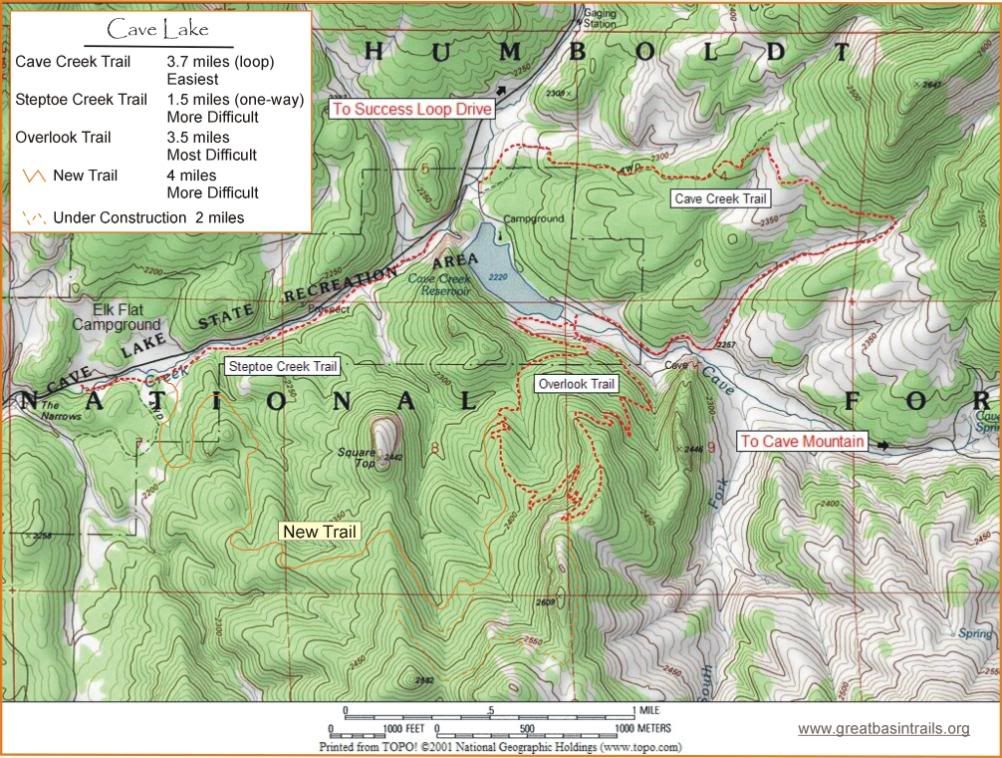
I had spent the evening hiking up the Twisted Pines trail at Cave Lake. This fence lizard was near my turn-around point. Here is a decent map of the area that I just found.


This large fence lizard was at Great Basin NP. It seemed to be posing by the flowers.

Tuesday, July 26, 2011

Kirch Lizards

While visiting a Parish Phacelia site near the Kirch WMA south of Lund, Nevada, I got to see several lizards that I never saw in Spring Valley. (I believe the name of the playa was Sunnyside playa, named after the nearby town.)

The first two pictures are of a Great Basin Whiptail (Cnemidophorus tigris), I believe. These guys were everywhere throughout the valley.


The last two pictures are of a Long-nosed Leopard Lizard (Gambelia wislizenii), I believe. The whiptail looks like it has a longer nose, but common names can be like that. I only found one of these guys. More information can be found here.

Sunday, May 01, 2011

Short-horned lizard (Phrynosoma hernandesi)

I was super excited to find some 'horned toads' in Spring Valley. We found and caught three of them. There are two species in the area. Now I'll have to keep my eyes open for the Desert Horned lizard (Phrynosoma platyrhinos).


Here is the species information from the Great Basin National Park site.
Unique Characteristics: Small dagger-like head spines (horns).
Description: Beige, brown, gray, or reddish above, rear of throat and chest buff or yellowish orange, 1.75-4.3 inches (4.4-10.8 cm).
Similar Species: Desert horned lizard has longer horns.
Habitat: Found on loose soils in sagebrush and pinyon/juniper habitats, below 11,000 feet.
Range: Found in Spring and Steptoe valleys.
Food: Ants, spiders, snails, insects.
Reproduction: Oviviparous, 5-36 young born July-September.

Thursday, May 27, 2010

Florida Lizards

These are two very common lizards, and are well represented on this blog, but I liked both photos.Six-lined Racerunner, Aspidoscelis sexlineata sexlineata
We are always kicking up Racerunners while we are hiking through dry areas. They sure can speed off quickly. This one was still warming himself in the morning sunshine, so he permitted a closer photo than usual. I love their colors. I don't know how they determined that there are just six lines on them, but I guess you have to name it something.
Brown Anole, Anolis sagrei
These introduced and invasive lizards were all over near Cedar Key. I enjoyed seeing this guy puff out his neck flap.

Thursday, April 08, 2010

More Florida/Alabama Lizards

Here is a collection of lizards that I have encountered while working in Florida and Alabama, in addition to the ophisaur. The lizards sure have been out-numbering the snakes in species and individuals. Several lizards on this trip have gotten away without being captured in a photo, like the race runner and broad-headed skink.

Anolis sagrei - Brown Anole
This is one of the non-native reptiles in Florida. They are from Cuba and the Bahamas. This one was near Tampa.
Scincella lateralis - Ground Skink
These seem to be fairly common. I found this individual at Torreya State Park. More often than not, I'd just hear them scurrying off through the dry leaves.

Hemidactylus - Gecko
This may be a Hemidactylus turcicus, a Mediterranean house gecko. Kelly found this guy while we were going to church. There is nothing like a visit with the Easter Gecko! We put the gecko on the tree trunk to get a picture, and I was amazed at how well he blended in. We almost couldn't find him after he scurried around the trunk.
Anolis carolinensis - Green Anole
This Green Anole was in a pine woods that had recently been burned at Kelley State Park in Alabama. I was trying to get a picture of him on the black bark. I don't know why he decided to display for me. Maybe he was trying to say that he wasn't afraid of someone as slow as me.
Same picture, but I liked the colors in the close-up. Click on it and blow it up to full-size. The yellow on the labials is pretty cool.
Sceloporus undulatus - Eastern Fence Lizard
This individual seemed especially vibrant. He had quite a good set up on a hollow log that allowed for a rapid retreat. A pretty common lizard, but I love seeing them. They remind me of the thrill of the chase I would get as boy whenever I spied one.

Wednesday, April 07, 2010

Ophisaurus ventralis - Eastern Glass Lizard

While walking the pipeline corridor in Santa Rosa County, Florida, Mark spotted this gorgeous Ophiosaur. I very gently picked him up, since I did not want to injure him in any way. To keep him from struggling, I cradled him in my lap, where he quickly calmed down. Here you can see him looking out from under my shirt.
We estimated that he was 20 inches. I love his coloration, with the black background and colored checks. These lizards are gentle and should never be roughly handled.


The Ophisaur was somehow holding on to me. I lifted up my shirt and found out how!

Monday, June 08, 2009

More Florida Reptiles

I had a couple more Florida reptile pictures that I wanted to put up before we go to the DR next week. Kelly and I went to the wastewater treatment plant to check out some birds while the girls went to the beach. We got quite a few birds, including Snowy Egret, Little Blue Heron, Black-necked Stilt, Cattle Egret, and Mississippi Kite. As we were talking with the maintenance staff, we spotted a very large female Florida Softshell crossing the parking lot towards us. Evidently, she had just laid her eggs across the road. Picking one up might not be recommended for most people...

Apalone ferox - Florida Softshell

Plestiodon laticeps - Broadhead Skink
Clinging to the side of a pine tree.


Aspidoscelis sexlineata sexlineata - Six-lined Racerunner
We heard quite a few of these guys tearing off through the underbrush. They sure sound fast.

Anolis sagrei sagrei - Brown Anole
This attractive anole is not native to the US.


Anolis carolinensis carolinensis - Northern Green Anole
These guys bring back fond memories of the pet Anoles we had loose in our house.

Friday, May 29, 2009

Eastern Glass Lizard

Ophisaurus ventralis - Eastern Glass Lizard
Kelly found this young Eastern Glass Lizard at a local park. Adults are stunning and can get around three feet long. Typically, they stay out of sight under objects. There are several species of legless lizards in North America. Check out Kelly's blog for an amazing photo of a beautiful adult Eastern Glass Lizard.


Monday, March 30, 2009

Big South Fork Backpacking Trip

Rich Wathen, Andrew Irwin, and I went backpacking in the Big South Fork, Tennessee this past weekend. It is a great park about five hours away, and it seems to be not very crowded. We never saw anyone on the trail. The area is fairly rugged, but the trails were pretty well maintained. Below you can see Andrew descending a ladder. Ladders are more fun when you have a pack on and the wood is wet.

Here is one of the first of many rockhouses we came through. There had been plenty of rain before and during the hike, so every overhang was a waterfall.

It was great to see spring wildflowers blooming. Higher up, where it was drier and sunnier, Trailing Arbutus (below) was the most common flower. Also, there were Bluets and Violets.

We started our trail from the Bandy Creek Visitors Center and hiked along Fall Branch towards the Big South Fork of the Cumberland River. Fall Branch Falls was the first big waterfall we came to.

Both Thursday and Saturday afternoons were warm and sunny. There were many fence lizards basking along the trail, and would scurry off through the leaves or along a branch when we came near. I was hoping to see some snakes, but no luck. We did find a bunch of leathery egg shells near a sandy hole on a ridge top, but I didn't find any babies nearby.

Promontory on the Grand Gap Loop overlooking the river. The next several photos were taken from this lookout. Despite getting a late start on Thursday, we decided to stick with our itinerary and take this loop. It was sunny, beautiful, and worth the extra miles. It was a couple miles to get from the point the photo was taken, to the promontory.

View looking south over the valley.

Rich enjoying the view.

The Big South winding its way past the cliffs towards Angel Falls.

Further along the Grand Gap Loop offered a view of Angel Falls. The river was very high. This is supposed to be a very popular place to kayak in the summer.

Amelanchier was blooming along the ridgeline, usually leaning out in the most inaccessible places. Here was the one tree I found growing right near the trail.

The view Thursday evening near our campsite. With steady hiking, we got twelve miles done on Thursday, which was pretty good considering that we started just before three o'clock. We made camp along the ridge in a young pinewood. It was warm and dry that night. I made a small fire to boil water for our dinner and slept in my hammock.

We knew we had miles to make up on Friday. Thursday night was gloriously clear, with a new moon, bright stars, and a bright sky. Friday morning was gray. After a couple hours, we made it down off the ridgeline to cross Station Camp Creek. As we descended into a more mesic area, the wildflowers became abundant. Here is Blue Phlox (P. divaricata). I may post more of the wildflower pictures in a later post. All of my stopping to take pictures couldn't have been too bad, since we still made it 24 miles and got to our campsite along a nice creek a little after five o'clock. It drizzled and dripped on us while we ate and set up camp, and then rained for at least half the night. I slept in my hammock under a poncho, but I still need to improve the technique. I did get a little wet, but I slept comfortably.

Friday afternoon we entered a section of the park that just had a prescribed burn. We were happy to find a campsite that was not ashy. Saturday morning we hiked out of the burn area and entered Pickett State Park, which is contiguous with the Big South Fork. The state park was beautiful and might have been my favorite of the three days. It rained a bit in the morning on Saturday, which made the plank bridges somewhat tricky. The trail was fairly well maintained and had planks or bridges when crossing little water bodies. Eventually, the trail crossed Rock Creek. I take it that usually the water is not this high and it is possible to hop across rocks. We just had to wade. Here is Andrew crossing. The current was pretty stiff.

Rich crossing Rock Creek.

Rock Creek was very pretty, with several waterfalls, deep pools, and rapids. It would be a great place to explore on a warm summer day.

Once Rich and Andrew had the socks wrung out, we had to cross again. Here is Rich crossing the creek. The trail then steeply ascended hillside to follow Thompson Branch towards its head.

Andrew, Rich, and I considering a trail junction. Near the end of our trek, we meant to catch the Hidden Passage trail, which we did. Unfortunately, this trail is a loop and we ended up seeing more of the loop than we intended.

The Hidden Passage

Crystal Falls, a beautiful falls near the Hidden Passage Trailhead. After figuring out where we were and how to get back to the car, we finished our hike a little after three o'clock. I would guess that we put in 17 miles on Saturday. I had a great time.